- Published on
Most of us aren't in Silicon Valley
- Authors

- Name
- Matt
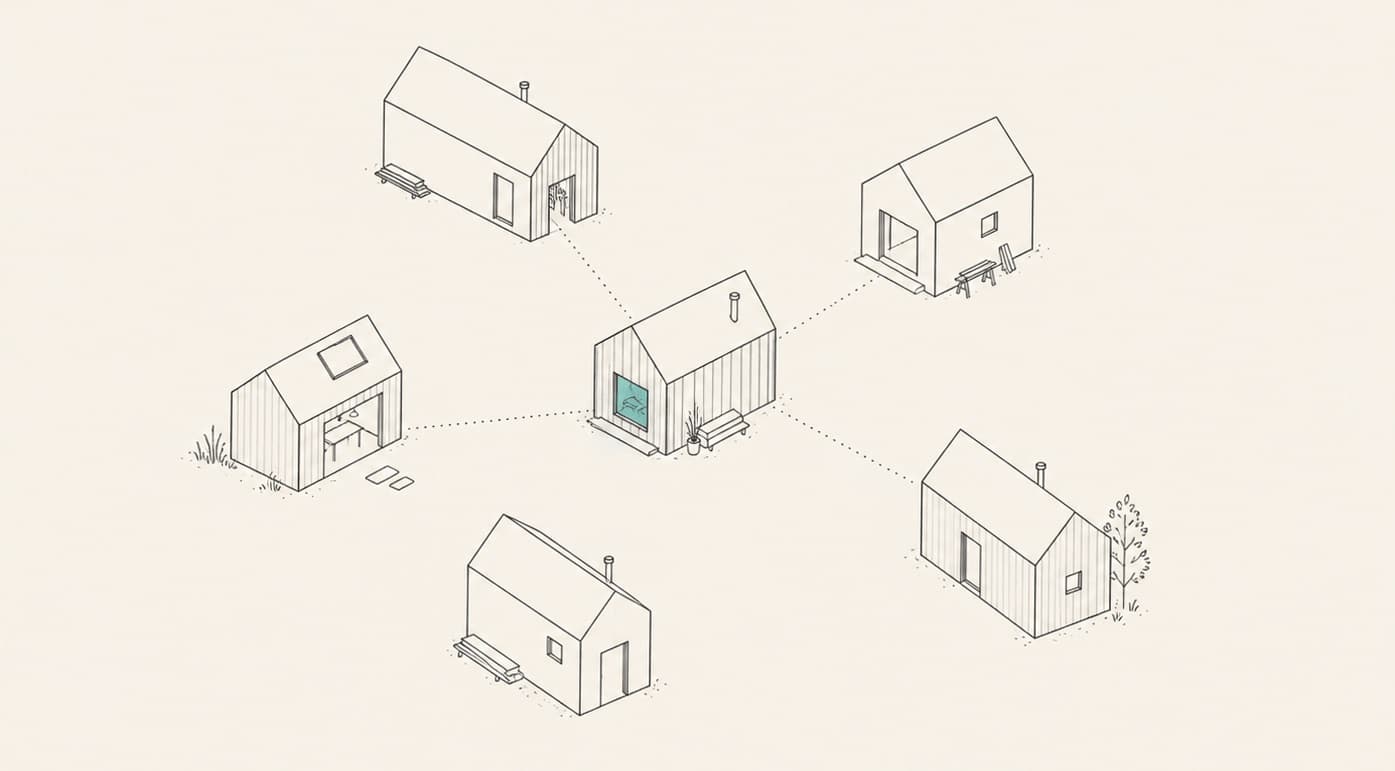
Most of us aren't in Silicon Valley, and I think we've underestimated what that costs us.
Not the funding. Not the talent density. Those are obvious and they're not the thing I keep noticing. The thing I keep noticing is smaller and harder to see: the absence of people in the same boat, close enough to talk to, often enough to matter.
I've been telling myself a story about being a lone builder. That working on rcordr in the evenings, alongside a full-time job, is a kind of independent practice. There's truth in that. But there's also a version of it that's just cope. A way of dressing up an absence as a choice.
The thinking partner you don't have
The first thing you lose, building outside any real builder community, is a particular kind of thinking partner. Not a mentor. Not a co-founder. Someone in the same boat, working on something different but structurally similar, who you can put a half-formed problem to and get something back that moves you.
I have plenty of people I can talk to. Most of them aren't building things. They're generous and smart, and they will listen carefully when I describe a decision I'm wrestling with on rcordr. But the inputs they have access to are about my situation, not about the texture of the problem. They can't say "yeah, I tried that, it didn't work, here's why." Because they haven't.
The other half of this is subtler. Articulating a struggle to someone who actually gets it often reveals what you'd already half-worked-out on your own. The conversation isn't just for their input. It's for yours. You hear yourself say something and realise you knew it. That doesn't happen the same way when you're explaining the whole context from scratch to someone outside it.
Most of us are doing without this, and we've stopped noticing.
The launchpad you don't have
The second thing you lose is people who'll actually try the thing.
Not customers. Not yet. People who'll click around, find the broken bit, tell you the onboarding is confusing, push back on the positioning, and do all of that in a register that helps rather than hurts. An early audience that's already inclined to engage seriously with new work because that's what the room does.
In dense builder communities this is ambient. You ship something and ten people you half-know give it a real look. It's not a marketing channel. It's a feedback environment. Outside those communities, getting that kind of engagement is a project in itself, and most of us don't have the energy for it after the building.
The cultural piece, which is the real point
Here's where I want to be careful, because this is the part I actually think matters.
What Silicon Valley has isn't just a density of builders. It's a norm of generous critique. People expect to help each other. The default move when someone shows you something half-built is to engage with it seriously and try to make it better. That isn't universal. It's a learned cultural posture, and a lot of environments don't have it.
I've been in plenty of rooms, engineering rooms especially, where the default move is the opposite. Where showing your work invites a small contest about what's wrong with it. Where critique is performance. I think there's an English version of this that's particularly corrosive, dressed up as standards or rigour, that quietly teaches people not to share things until they're polished enough to survive an attack.
This is the part I find harder to talk about, because I've been on both sides of it. I try, deliberately, to be useful when people in my network are trying to do something. I'll click the link. I'll send the note. I'll find the thing to say that's both honest and constructive. I don't always get it right but I try.
I don't see enough of it. Not from those specific people, this isn't a complaint about anyone, just in general. Generosity toward people building things is rarer than it should be, and I think a lot of builders working outside dense communities are quietly absorbing that, calibrating downward, sharing less.
What this means, for now
I'm not going to pretend I have a tidy answer. But I think naming the disadvantage honestly is the start of doing something about it.
For me, sidewrks is part of that. It started as writing in public, a partial substitute for the conversations I'd otherwise have over coffee with people in the same boat. I'm increasingly thinking about it as something more than that. Whether that becomes a community in any formal sense, I don't know yet. I'm wary of groups that exist to talk about building rather than actually build alongside each other, and I'd rather move slowly than get that wrong.
The smaller thing, the one I have more control over now, is to keep being the kind of person I want around me. To click the link. To send the note. To take other people's half-built things seriously. Not because it scales into anything. Because the absence of it is what I've been quietly noticing, and the only honest response is to be part of the supply rather than just the demand.